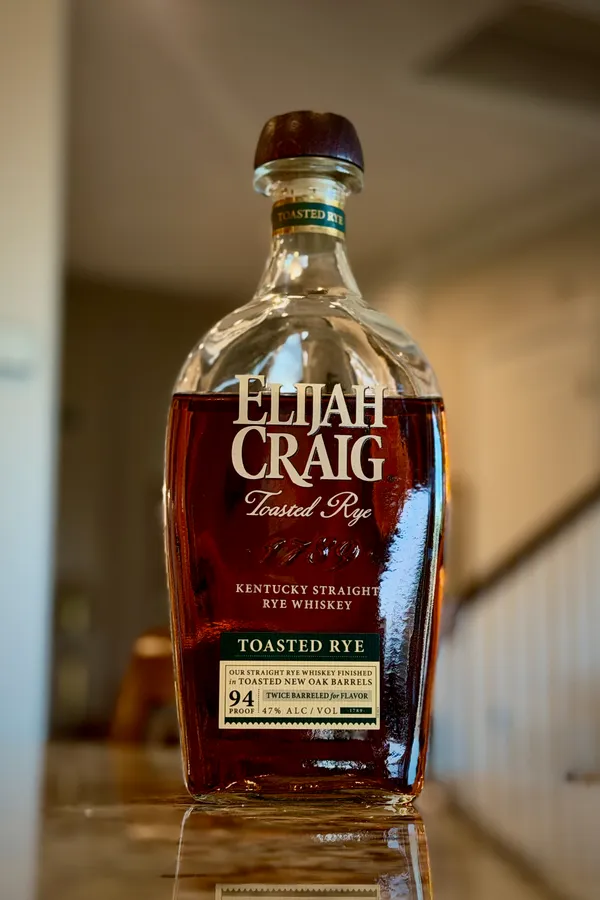
Elijah Craig Toasted Rye Review
Overview: The Elijah Craig Toasted Rye is a bit of an oddity — a 51% rye whiskey (barely enough to qualify as rye) finished in toasted new oak barrels. That’s a process you usually see applied to bourbons, and it shows in the profile. At 94 proof and around $35, this sits at the approachable end of the EC lineup. Think of it as the bridge between spicy rye and sweeter bourbon territory — the grain pushes one direction, the toasted barrel pulls the other, and the result is more interesting than either element alone would suggest.
Toasted finishes on rye are genuinely rare. The category tends to get charred barrels or wine casks for finishing; toasted new oak is unusual enough that it’s worth noting when you find it done well. Heaven Hill is applying the same concept here that they used on the Toasted Barrel bourbon, and it translates differently across the two grain bills in ways worth understanding.
How I Found It: Picked this up at Total Wine on the same run as the Toasted Barrel — both were marked “limit one per customer.” That’s a signal worth noticing at a sub-$40 price point. Constrained supply at reasonable MSRP usually means the distillery isn’t overproducing to meet demand, which in my experience correlates with better quality control on what does make it to shelf. Grabbed both without much deliberation.
Age: NAS
Proof: 94 (47% ABV)
Mashbill: 51% rye (remainder undisclosed)
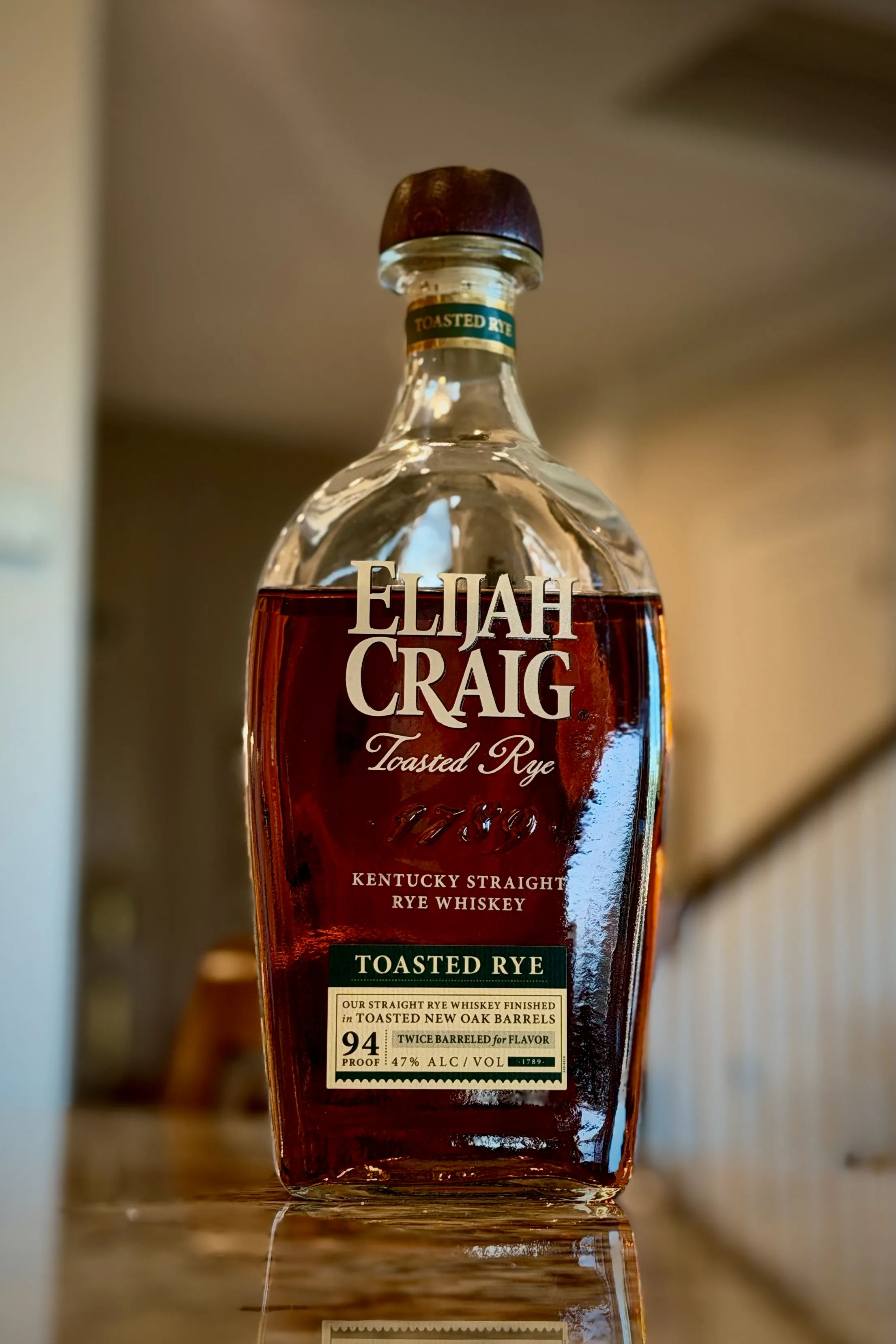
Nose: Surprisingly soft for a rye — crème brûlée and hazelnut up front, with a floral note that reads almost like bubblegum. There’s a whisper of cedar underneath, and the toasted oak is present but restrained. It’s more pastry shop than grain field, which is the whole idea here. The medicinal or dill-forward notes that turn some people off traditional ryes are almost entirely absent — the toasted barrel has smoothed over the edges. (For more on what toasted barrels actually do to a spirit, the Bourbon 101 article covers it.)
Palate: Bright and creamy at the same time. Cardamom and lemon peel give it a little zing on entry, then it settles into honeyed grain, butterscotch, and something close to chocolate chip cookies fresh out of the oven. The toasted barrel does real work here — it adds sweetness without the heavy vanilla wallop you’d get from a charred barrel. The 51% rye is enough to keep a distinct grain character running underneath all that sweetness, so it never fully loses its identity as a rye. It just becomes a friendlier version of one.
Finish: Long and warming, which is a pleasant surprise at 94 proof. Sugar cookie sweetness lingers, then gives way to a hint of black pepper and a little warmth that hangs around. Not complex in a challenging way — just pleasant and easy to revisit. Cleaner exit than the Toasted Barrel, which dries out more aggressively.
Side by Side with the Toasted Barrel: Tasting these back to back is the right move. The Toasted Rye is brighter and more forward on entry — the rye grain creates a zing the bourbon version doesn’t have. The Toasted Barrel is rounder and more dessert-forward, with a longer, drier finish. If you tend toward spice and citrus, the Rye is your bottle. If you want rich and sweet, the Barrel. Both are worth having, and at these prices the comparison costs less than a single pour at most bars.
Final Thoughts: If you find traditional ryes too medicinal or dill-forward, this is worth your attention. The toasted finish rounds off the sharper rye edges and pulls it firmly toward the sweeter end of the spectrum. It’s not going to blow you away, but it punches above its price point and drinks well neat. Would I buy it again? Yes, and I did — same limit-one situation, same instinct to grab it without overthinking it. That’s the right approach here.
If You Liked This, Try…
- Elijah Craig Toasted Barrel — The bourbon sibling. Same toasted finish concept applied to a corn-forward base. Rounder and sweeter; good back-to-back comparison.
- Bardstown Bourbon Company Origin Series Rye — A different take on rye at a similar price point. No toasted finish, but estate distilled with its own character. Worth comparing to understand how much the finishing barrel shapes this EC expression.
Rating: Middle Shelf — Rating system explained