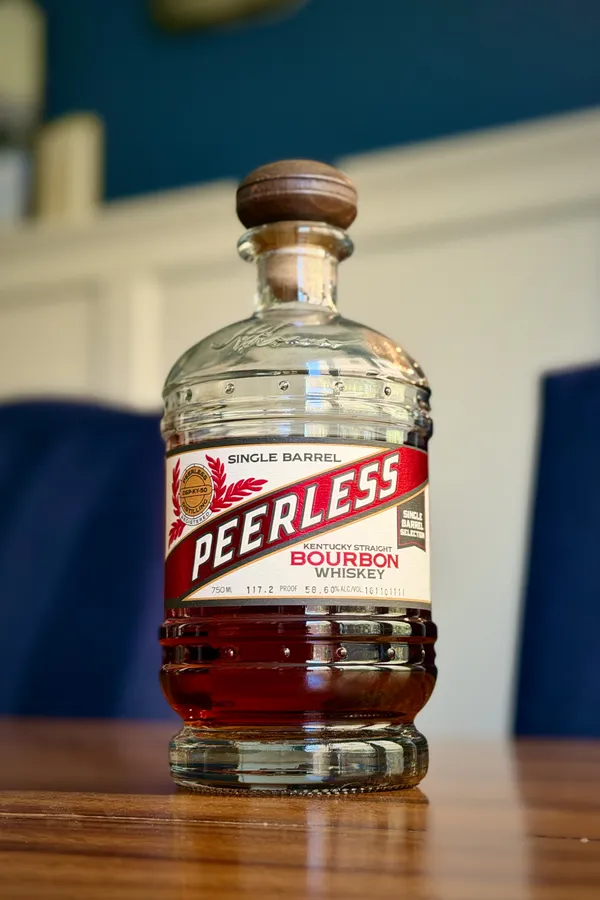
Kentucky Peerless Single Barrel Bourbon Review (Barrel 161101111)
Overview: Kentucky Peerless Distilling Co. operates out of Louisville and does things their own way. No sourced distillate, no shortcuts, no compromise on the grain-to-bottle process — and a price tag to match that commitment. Their single barrel expressions typically run $75 to $90, which puts them in a tier where the bottle genuinely needs to perform. At that price, “pretty good” isn’t enough.
I picked this one up on a recommendation — not a club allocation, just someone whose palate I trust pointing me at a specific barrel. That’s usually enough for me to take the swing. Barrel 161101111 was distilled on November 1, 2016, which means it had just over six years in the barrel when I opened it. The proof came out at 117.2, which is serious but not unusual for a Peerless single barrel. I wanted to like this bottle. The setup was all there.
It didn’t get there.
The Sweet Mash Factor
Understanding why Peerless barrels vary as much as they do starts with their fermentation process. While nearly every Kentucky distillery uses sour mash — adding spent mash from a previous run to stabilize pH and ensure batch-to-batch consistency — Peerless uses sweet mash exclusively. Every fermentation starts completely fresh, with no carryover from the previous batch. That gives each run room to develop unexpected flavor compounds in ways that sour mash simply can’t. When a sweet mash barrel hits, it can be exceptional in ways that stand apart from anything else in the category. When it misses, there’s no blending cushion to catch the fall. The variance is the whole point, and the variance is also the risk.
This barrel is on the wrong end of that variance.
Distillation Date: November 1, 2016 (decoded from barrel serial 161101111)
Age: ~6 years at time of review
Proof: 117.2 (58.60% ABV)
Mash Process: Sweet mash (non-standard — see above)
Filtration: Non-chill filtered
Price: ~$85–90
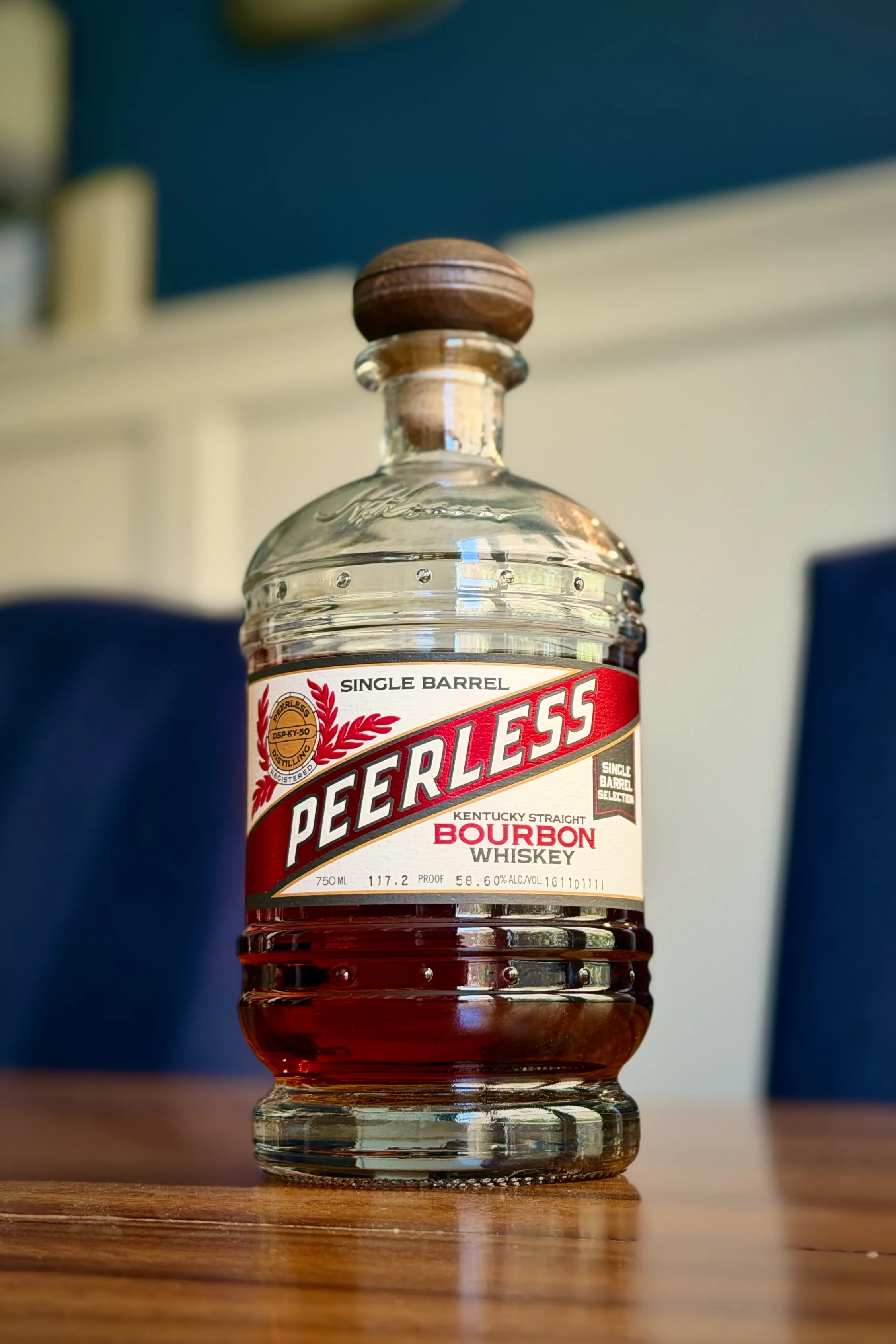
Nose: At 117.2 proof, the ethanol hits first and it takes a solid ten minutes in the glass before it backs off enough to work with. Once it settles, what’s there is heavily wood-forward — charred oak, seasoned cedar, a sharp edge of rye spice. You can find orange peel and dark cocoa if you dig for them, but they’re buried. The caramel and vanilla that usually anchor a bourbon nose at this age are muted to the point of being afterthoughts. That’s the first sign that the wood ran this barrel rather than the other way around.
Palate: The entry has some promise — a flash of burnt sugar and black pepper that suggests something interesting might develop. It doesn’t. The mid-palate turns quickly into drying wood tannins and an astringent bitterness that never fully resolves. There’s a dry tobacco and leather character underneath that in a different barrel, with more corn sweetness to balance it, might be interesting. Here it just tastes like the oak won. For 117 proof the heat is also more aggressive than expected — it drinks hotter than the number suggests, which usually means the other flavor elements aren’t doing enough work to carry the proof. The mouthfeel is decently oily but it can’t rescue what’s happening on the palate.
Finish: Medium length, and not a pleasant one. The liquid recedes and leaves behind barrel char, baking spice, and a mouth-coating dryness that turns bitter at the tail end. A good finish pulls you back for the next sip. This one leaves the palate feeling fatigued and vaguely relieved it’s over.
Final Thoughts: Peerless is doing real, serious work in Louisville and I have no doubt that some of their barrels are everything the reputation promises. This specific barrel — 161101111 — is not one of them. The wood dominated from nose to finish without the sweetness or fruit character to hold it in check, and at $85 to $90 that’s a hard thing to overlook. The sweet mash process makes every bottle a genuine single barrel in the truest sense: completely independent, completely unpredictable. That’s admirable. It also means the odds aren’t always in your favor.
The recommendation that sent me toward this bottle was well-intentioned. Barrel variance is real, and the same distillery that produced this one has almost certainly produced better. If you’re going to take a swing at a Peerless single barrel, taste it before you buy if at all possible. At this price point, the lottery ticket is an expensive one when it doesn’t pay out.
If the Barrel Proof Concept Appeals to You…
This bottle’s failures are specific to this barrel — not a reason to avoid cask strength bourbon generally. These deliver where the Peerless didn’t:
- Wild Turkey Rare Breed Barrel Proof — 116.8 proof, consistently available, around $50. The benchmark for what barrel proof bourbon should deliver at an accessible price. No lottery required.
- Henry McKenna 10 Year Single Barrel BiB — Single barrel variance at a more honest price point. The oak depth here is the main event too, but it’s balanced and intentional in a way this Peerless barrel wasn’t.
Rating: Leave it on the Counter — Rating system explained