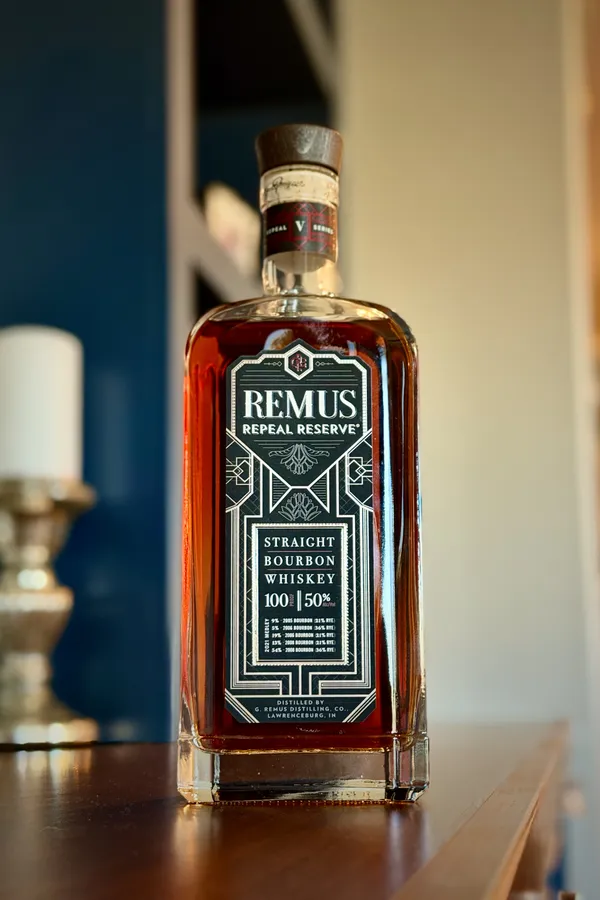
Remus Repeal Reserve Series V Review
Overview: The Remus Repeal Reserve is MGP’s annual argument that Indiana distillate belongs in the same conversation as any Kentucky bourbon on the shelf. Each release is a fully transparent blend — Ross & Squibb publishes the exact mashbills, distillation years, and percentages, which is a level of honesty you rarely see in an industry that defaults to NAS labels and vague “hand-selected” language. If you’ve ever wondered why so many bottles say “distilled in Indiana,” this series is the best case for why that can be a feature rather than a footnote.
Series V, the 2021 release, is the oldest and most age-forward blend the line has produced. Where later releases like Series VI drew on barrels from 2008–2014 — with the oldest component at 14 years — Series V reaches back to 2005 and 2006, making the youngest whiskey in this bottle 13 years old. That’s a fundamentally different animal. Older barrels don’t automatically mean better bourbon, but when the blending team has 13-to-16-year MGP stock to work with and handles it well, the results are hard to argue with.
The Blend
The transparency is the thing. Here’s exactly what’s in the glass:
| Vintage | Age When Blended | Mashbill | Share |
|---|---|---|---|
| 2005 | 16 years | 21% rye (low rye) | 9% |
| 2006 | 15 years | 36% rye (high rye) | 5% |
| 2006 | 15 years | 21% rye (low rye) | 19% |
| 2008 | 13 years | 21% rye (low rye) | 13% |
| 2008 | 13 years | 36% rye (high rye) | 54% |
The bulk of the blend — 54% — is 13-year high-rye from 2008. That’s the engine. The 2005 and 2006 components (33% combined) are what push this into different territory from the releases that followed. Ultra-aged bourbon carries deep wood sugar concentration and an antique oak character that younger barrels simply can’t reproduce, and at a third of the blend that influence is felt.
Age: 13–16 years (see blend above)
Proof: 100 (50% ABV)
Mashbill: Multiple — see blend breakdown above
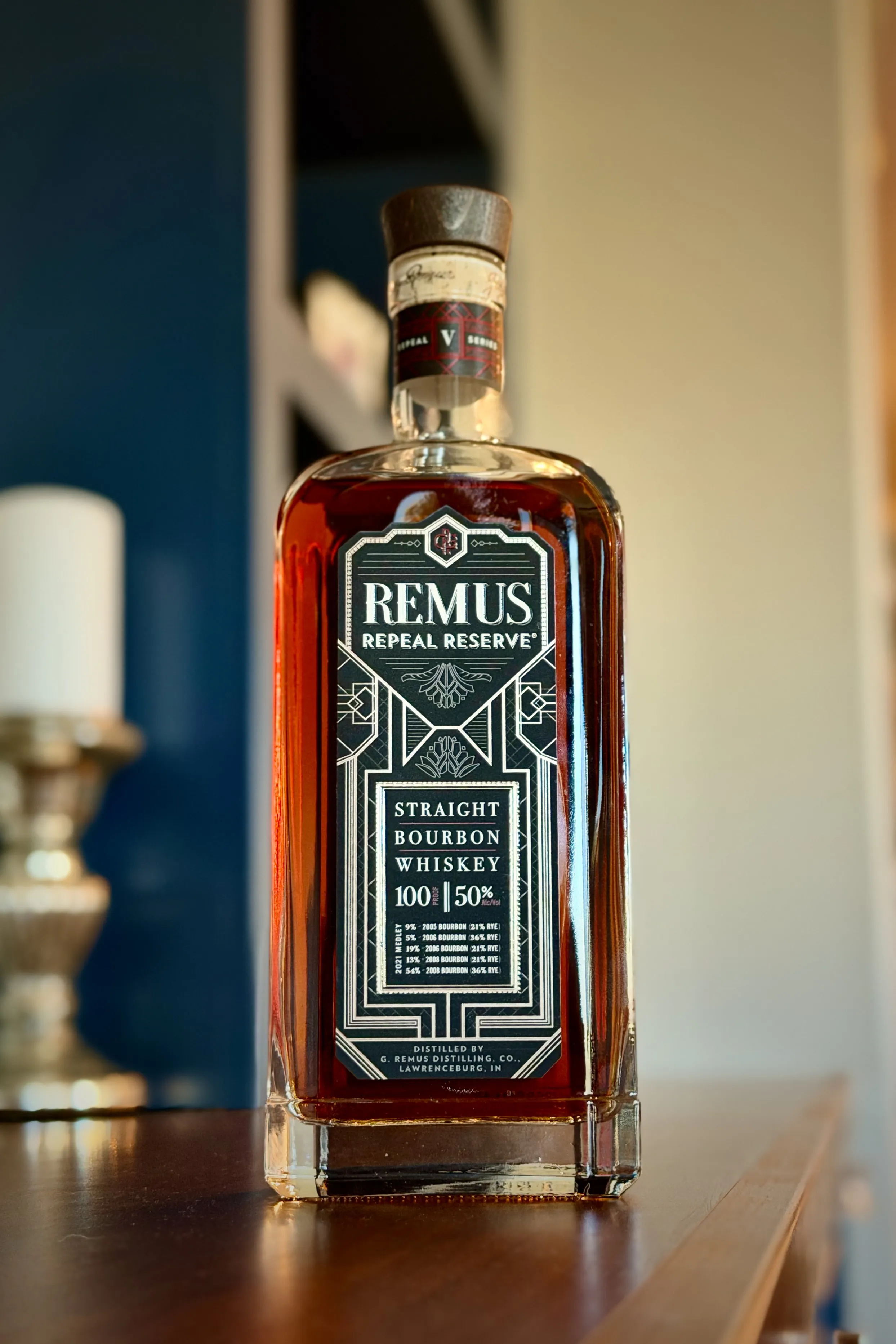
Nose: This is where the age shows itself. Dark brown sugar and maple syrup lead, but they sit inside a deep, antique oak framework — the kind of old-wood character you get from decades in a rickhouse rather than from char alone. Let it open up and the fruit layers build: stewed plum, dark cherries, golden raisins. Underneath that there’s pipe tobacco, vanilla bean, and a whisper of cocoa that grounds everything. It’s a rich, unhurried nose that rewards the time you give it. Nothing sharp, nothing young, nothing out of place.
Palate: Oily and dense — the mouthfeel is the first thing that catches you, unusually coating for a 100-proof bourbon. The entry is dark caramel, toffee, and candied pecans, the wood sugars from those 2005 and 2006 barrels doing their work up front. Mid-palate the high-rye 2008 component takes over: baking spices, cinnamon, and black pepper that give the sweetness something to push against. Beneath that there’s dark chocolate and a deep barrel char note that adds structure without pulling toward bitterness. The balance between the aged sweetness and the rye spice is what makes this bottle work — neither side wins, and the tension between them keeps you coming back.
Finish: Long, warm, and unhurried. The dark fruit sweetness fades gradually, giving way to seasoned cedar, old leather, and a persistent rye spice that stays well past the sip. There’s a very faint, pleasant oak tannin on the tail — exactly what you’d want from 15-year-old barrels, present enough to signal the age without turning astringent. It’s a finish that wraps things up slowly rather than cutting off, which is what separates a well-managed old bourbon from one that’s gone too far in the wood.
Series V vs. Series VI
Tasting these back-to-back is the right call if you can manage it. Series VI is an excellent bourbon on its own terms — lively, well-balanced, completely justified at its price. But the age gap is real and it shows in the glass. Series VI draws on barrels from 2008–2014; its oldest component is 14 years and only 2% of the blend. Series V’s oldest barrels are 15 and 16 years, and they make up 33% of the blend. That difference in aged-oak presence is audible — the depth of the dark fruit, the richness of the mouthfeel, the length of the finish all reflect it.
Series VI is the bottle you buy when you can find it at retail. Series V is the bottle you open when you want to understand what this series is actually capable of.
Final Thoughts: Series V is the high-water mark of the Repeal Reserve line so far — not because it’s ostentatious, but because the blending team had exceptional old stock to work with and didn’t overthink it. The 100-proof format keeps it approachable while the age does all the expressive heavy lifting. At original MSRP around $90 this was a straightforward yes. Secondary market prices are a different calculation, but if you have a bottle or find one near retail, it’s worth opening.
In This Series
- Remus Repeal Reserve Series V — this review
- Remus Repeal Reserve Series VI — the 2022 release; younger barrel composition, still excellent
- Remus Repeal Reserve Series VII — coming soon
Rating: Top Shelf — Rating system explained