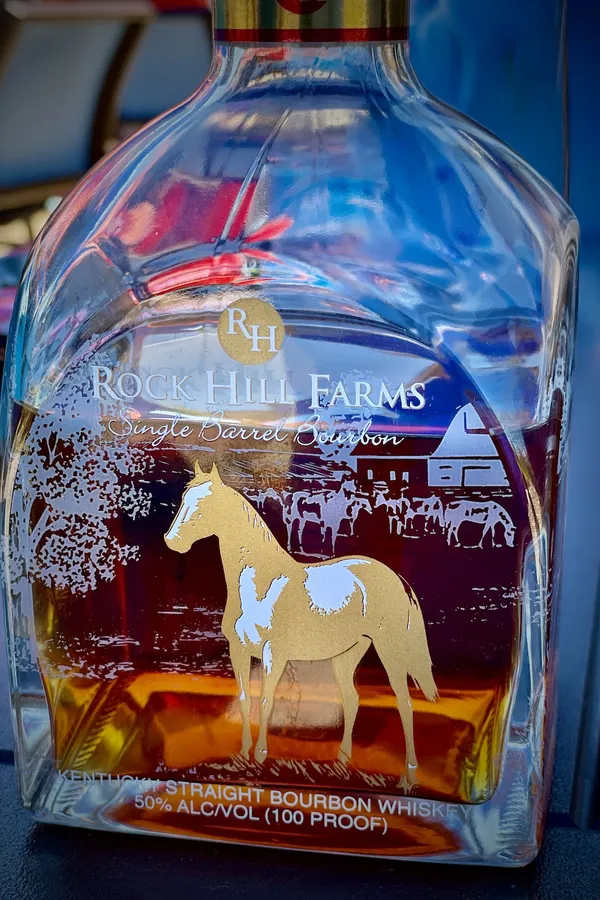
Rock Hill Farms Single Barrel Bourbon Review
Overview: Rock Hill Farms Single Barrel is one of those bottles that flies under the radar compared to its Buffalo Trace stablemates — no Pappy hype, no Blanton’s bottle-flipping circus. It sits quietly in the same family as Blanton’s and Elmer T. Lee, all sharing Buffalo Trace’s high-rye Mash Bill #2, but to my palate it’s the best of the three. I’ve never actually owned a bottle. I had this by the pour — $18 at a bar, which is a deal — and I’ve been hunting a bottle ever since.
If you’ve read Pappyland by Wright Thompson, you may already know that the Buffalo Trace Distillery sits on what was historically called Rock Hill Farm, a large estate in Frankfort, Kentucky where Colonel Albert Bacon Blanton once entertained guests and ran operations. The brand name isn’t marketing invention; it’s the actual ground the distillery stands on. Rock Hill Farms is, in a sense, the most literally named bottle in the Buffalo Trace portfolio.
How I Found It: A $18 pour at a good bar. That’s it — not a club allocation, not a retail find, just a bartender who stocked it and a menu that listed it at a fair price. Eighteen dollars for a pour of a single barrel Buffalo Trace Mash Bill #2 is genuinely reasonable, and that pour convinced me to start hunting a retail bottle. I haven’t found one yet. That says something.
Age: No age statement (typically 7–10 years)
Proof: 100 (50% ABV)
Mashbill: Buffalo Trace Mash Bill #2 — high rye (exact percentages undisclosed; same family as Blanton’s and Elmer T. Lee)
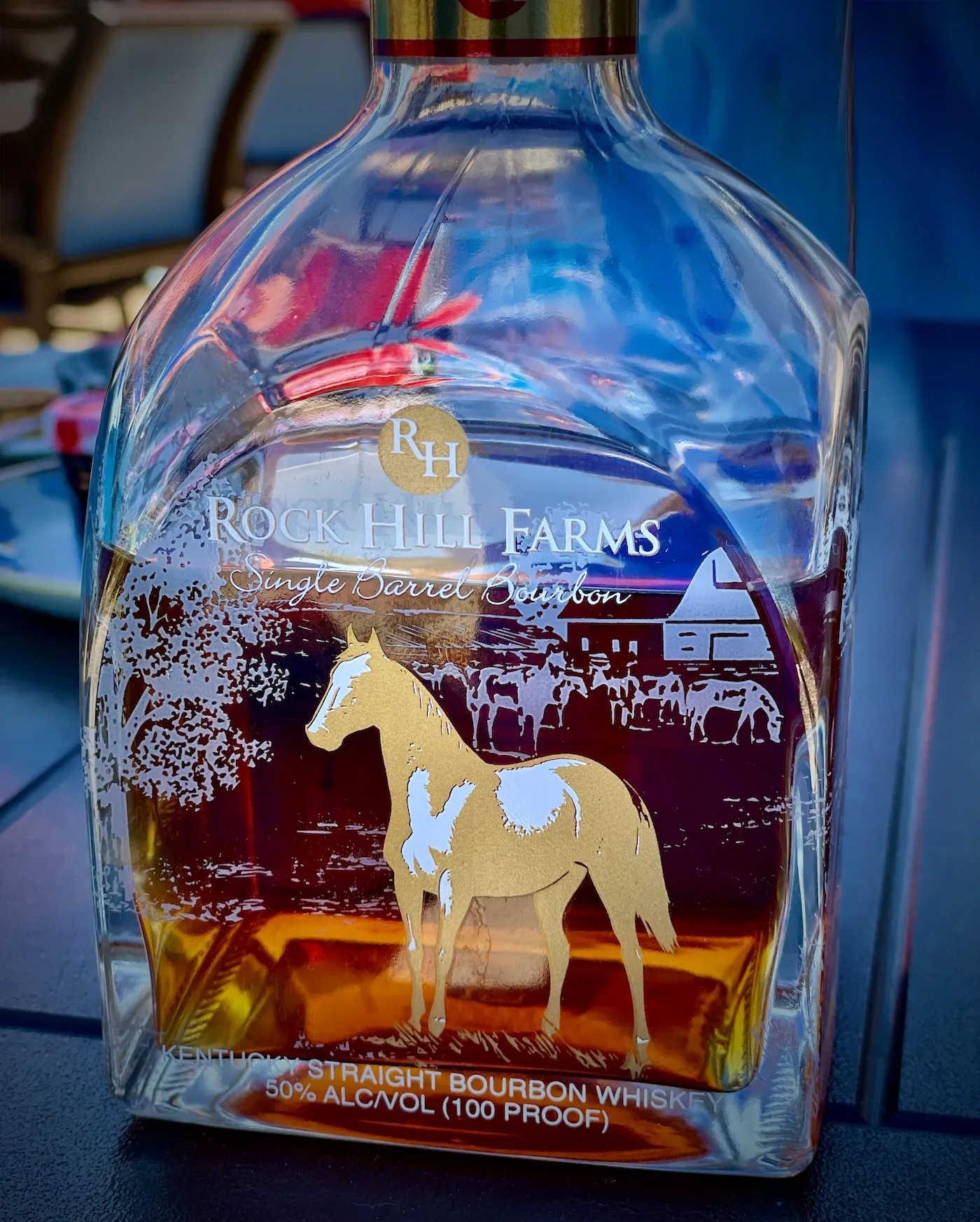
Nose: This is where Rock Hill Farms earns its keep. Light summer cherries and baked apple come forward first, followed by vanilla, cinnamon, and brown sugar. There’s a floral note underneath — something like orange blossom — that gives it an elegance you don’t always expect at 100 proof. A little hay and oak keep it grounded. Candied orange and hints of honey show up if you spend some time with it. Genuinely lovely nose, and one that kept pulling me back to the glass.
Palate: The high-rye mashbill announces itself — cinnamon, pepper, and allspice are right up front — but they’re balanced by creamy leather, vanilla, caramel, and a graham cracker sweetness that holds everything together. Fruit comes through too: cherry, peach, and some citrus in the background. Dark chocolate shows up late in the sip. The mouthfeel is silky and coating with almost no burn, which makes it easy to keep going back. Good complexity for 100 proof without any of the sharpness that high-rye bourbons sometimes show.
Finish: Medium-to-long, and it finishes the way a good bourbon should. The rye spice fades into toasted oak and creamy brown butter vanilla. There’s a dry oak note that develops as it sits — occasionally a little pepper comes back around for a final pass. It lingers without overstaying its welcome. Nothing harsh. The finish is what makes this bottle memorable and what made the $18 pour feel cheap.
Where It Sits in the Buffalo Trace Lineup
Buffalo Trace runs two main mashbills for their premium single barrel and small batch line:
- Mash Bill #1 (lower rye): Benchmark, Eagle Rare, Buffalo Trace, E.H. Taylor
- Mash Bill #2 (higher rye): Blanton’s, Rock Hill Farms, Elmer T. Lee
The #2 mashbill produces a spicier, more fruit-forward profile than the #1, and at single barrel expression you get the full range of what individual barrels can do with that profile. Blanton’s gets the most attention in this family — it’s the original single barrel bourbon, and the collectible bottle has turned it into a primary target for secondary market buyers. Rock Hill Farms has the same bones without the same secondary pressure, which is why $18 a pour still exists somewhere.
The honest assessment: Rock Hill Farms is the #2 mashbill at its best, and Blanton’s is the #2 mashbill at its most famous. If you can find Rock Hill Farms at retail, buy it over Blanton’s.
Final Thoughts: Rock Hill Farms doesn’t demand your attention the way some high-proof bottles do — it earns it quietly. The nose is exceptional, the palate has real complexity, and the finish is long and satisfying. At $18 a pour it’s a great deal. At retail, if you can find it, buy it without deliberating. I haven’t been able to, which tells you everything about where it sits in the allocation pecking order — but which also confirms it’s worth the hunt.
If You Liked This, Try…
- Old Carter American Whiskey Batch 6 — MGP-sourced, 13 years, fully uncut at 134.6 proof. A different distillery and a completely different proof range, but the same commitment to single barrel expression and the same tropical-fruit-meets-sweet-oak complexity that makes this family of whiskeys interesting.
- Henry McKenna 10 Year Single Barrel BiB — Heaven Hill’s 10-year single barrel BiB rather than Buffalo Trace’s. Different mashbill (lower rye), different house character, same general format: single barrel, 10 years, 100 proof, worth finding. Good cross-distillery comparison for understanding how much the source shapes a single barrel’s ceiling.
Rating: Top Shelf — Rating system explained