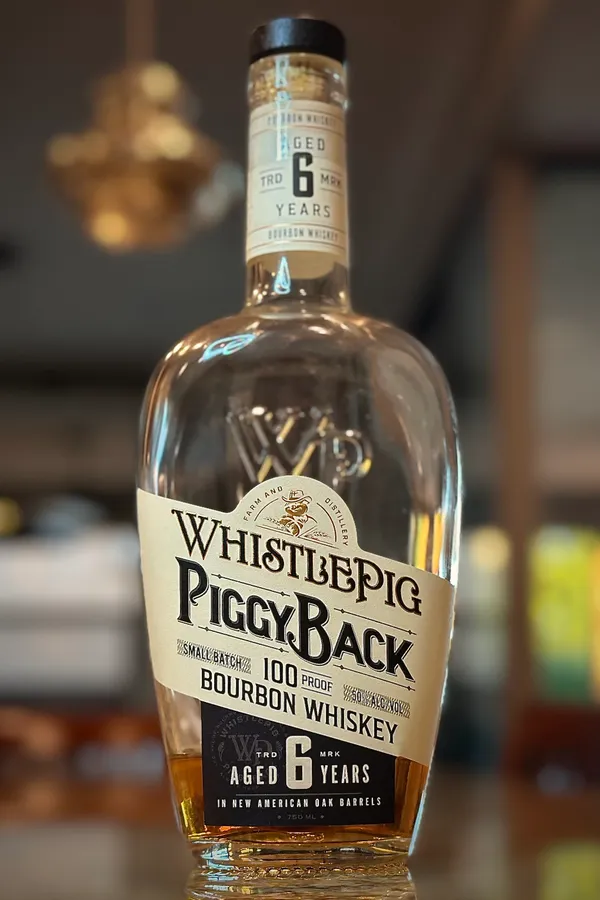
WhistlePig PiggyBack 6 Yr Small Batch Bourbon Whiskey Review
Overview: My relationship with WhistlePig starts with their ryes — particularly the 10 Year Single Barrel, which I keep coming back to as a benchmark at its price point. It’s high enough proof to hold up in an Old Fashioned and complex enough to sip neat, and it earns every dollar. So when the PiggyBack showed up as a club allocation, I had expectations.
That’s probably where things went sideways. The PiggyBack 6 Year is WhistlePig’s entry into bourbon — a small batch blend sourced from Indiana (likely MGP), Kentucky, and their own Vermont operation. The multi-state sourcing gives them flexibility, but it also means this isn’t really a “WhistlePig whiskey” in the same sense the 10 Year rye is.
Here’s the distinction worth understanding: WhistlePig’s rye lineup has a genuine identity. The grain comes from Alberta Distillers Limited in Canada — a specific source with a specific character — and it’s finished on the WhistlePig farm in Vermont. That combination produces something distinctive. The PiggyBack bourbon, by contrast, is blended from multiple sourced distillates across three states, with the Vermont component doing relatively modest work compared to the MGP Indiana and Kentucky whiskey in the mix. Sourced whiskey can be excellent — the question is whether the blending creates something with a real point of view or just fills a category gap. At 100 proof and 6 years, the spec is reasonable. The bottle just doesn’t deliver the way the brand’s reputation suggests it should.
Age: 6 years
Proof: 100 (50% ABV)
Mashbill: Undisclosed — website describes as “high corn”
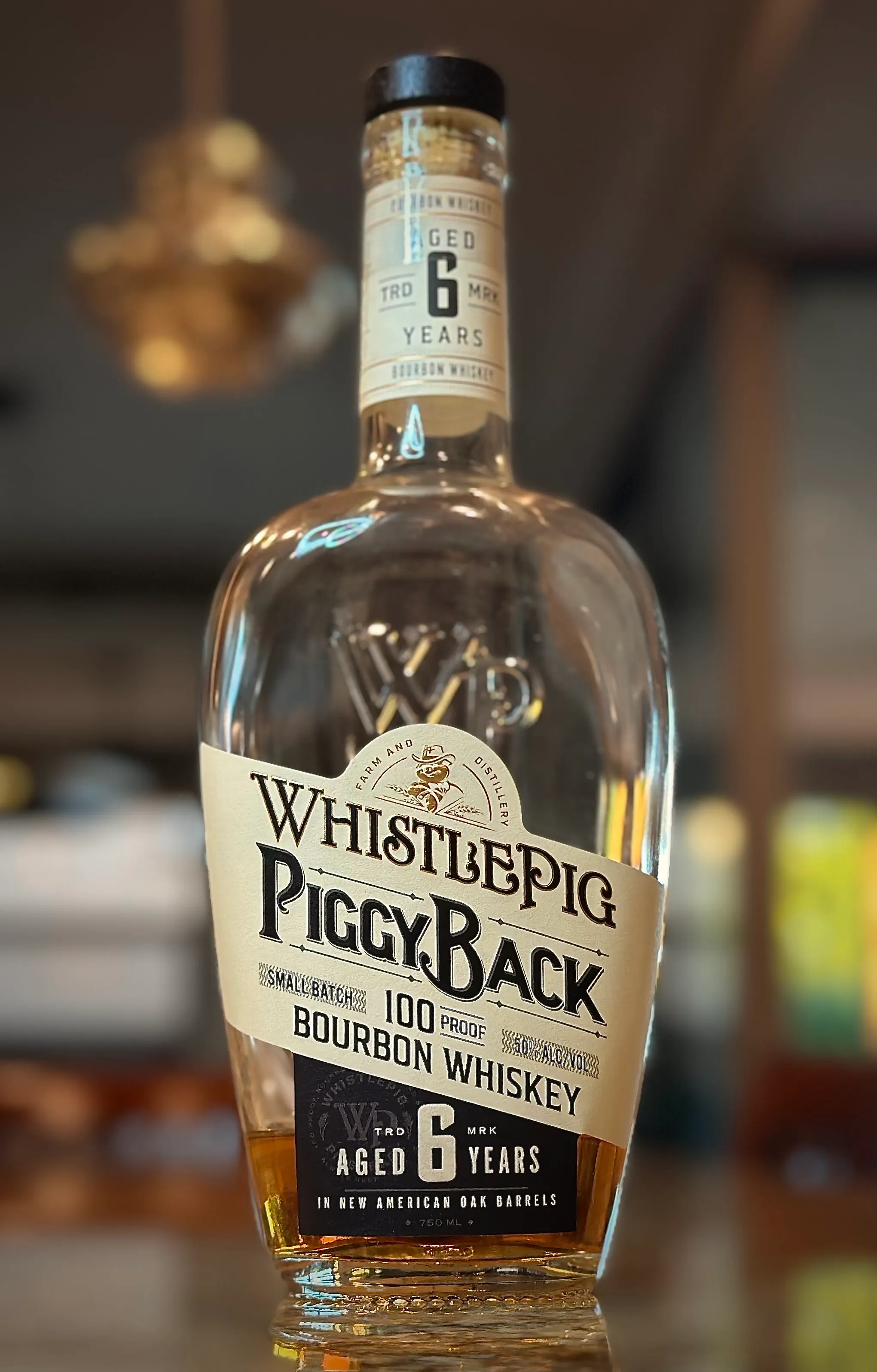
Nose: Not groundbreaking, but pleasant — toffee, a subtle hint of butterscotch, classic oak and vanilla. A touch of nuttiness (reminded me of Knob Creek) also comes through. Nothing wrong with any of it, nothing that grabs you either. There’s none of the tobacco-and-dark-fruit complexity that makes the WhistlePig rye lineup interesting — this nose could belong to any number of 100-proof sourced bourbons in the $50 range.
Palate: More interesting than the nose. It leads with a burst of spice — pepper and cinnamon — then pivots to sweetness: cherries, crème brûlée, toasted marshmallows, and apples with a dash of vanilla. The oak is present but surprisingly restrained for a 6-year. The spice-to-sweet transition is the best part of this bottle, but it feels like a preview of something better rather than the thing itself. If the palate had a third act, this would be a more interesting review.
Finish: Medium to long, revisiting the highlights from the palate — crème brûlée, cherries, and a lingering spice. Balanced, not complex. It wraps up cleanly without leaving you reaching for the next sip. The finish is the most “WhistlePig” part of the bottle — there’s a faint herbal quality in the exit that hints at the Vermont rye connection — but it’s subtle enough that you’d miss it if you weren’t looking.
The Cocktail Case
At 100 proof, the PiggyBack has the structural backbone to hold up in a cocktail. A Manhattan built with this is a solid drink — the spice-forward palate meshes well with sweet vermouth, and 100 proof doesn’t get lost under ice and mixers the way a 90-proof bourbon sometimes does. The same logic applies to an Old Fashioned, where the cherries and vanilla from the palate complement the bitters and sugar without fighting them.
If you’re buying this bottle primarily for cocktail use, the value proposition improves significantly. The aspects of this bottle that feel underwhelming neat — the restrained nose, the soft oak, the finish that ends before it should — become less important when you’re mixing it. The palate’s sweetness and spice do real work in a drink.
The Brand Extension Problem
WhistlePig has built genuine credibility in the rye category. The 10 Year and the single barrel program have earned their reputation. The PiggyBack bourbon feels like a category play — bourbon is a larger market than rye, and the WhistlePig name has retail pull. That’s a rational business decision. But it means this bottle isn’t carrying any of the identity that makes the rye lineup interesting. It’s a competent sourced bourbon wearing a rye brand’s label, and the disconnect shows.
Final Thoughts: This is a competent, smooth, inoffensive bourbon that I’m not rushing to replace. At this price point the bourbon market is dense with bottles that do more — and WhistlePig’s own rye lineup is one of the reasons this feels like a step sideways rather than forward. If you’re a WhistlePig fan looking for that same rye magic in a bourbon format, it isn’t here. Go back to the 10 Year. This one is cocktail material, and that’s fine — it just shouldn’t cost what it does relative to what you’re getting neat.
If You Liked This, Try…
- WhistlePig 10 Year Single Barrel Rye — The benchmark the PiggyBack doesn’t quite reach. More complex, more character, and a better argument for what WhistlePig is actually good at. If you can get into a barrel pick, do it.
- Bardstown Bourbon Company Origin Series — A better answer to the question the PiggyBack is trying to answer: what can a craft-oriented producer do with bourbon? Bardstown distills their own and it shows.
Rating: Bottom Shelf — Rating system explained