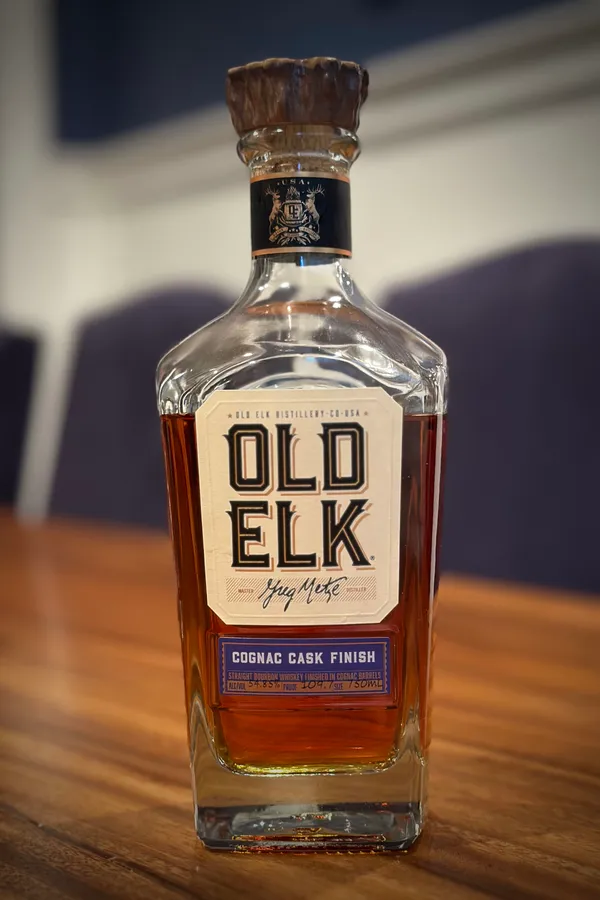
Old Elk Straight Bourbon - Cognac Cask Finish Review
Overview: Old Elk is a Fort Collins, Colorado distillery that’s moved fast — in a relatively short window they’ve put out an unusually broad lineup spanning multiple mashbills, a wheated expression, ryes, and a long list of cask finishes. This one is their straight bourbon finished in cognac casks, bottled at 109.7 proof. It’s at least the second release of this finish; I’ve seen earlier bottles at 108.5 proof, which appears to be the 2023 batch. The proof shifts release to release, the way most cask-finished small-batch bourbons do.
Two things make Old Elk worth understanding before you taste this. First is the mashbill — 51% corn, 34% malted barley, 15% rye. That 34% malted barley is enormous by bourbon standards, where malted barley usually shows up as a 5–12% enzyme contributor rather than a headline grain. Old Elk built their house style around high malt content, and it gives their whiskey a distinctive, slightly nutty and grainy backbone that you don’t get from corn-and-rye-dominant Kentucky bourbon. Second is the pedigree: Old Elk’s master distiller is Greg Metze, who spent decades running the stills at MGP in Indiana before coming to Colorado. The blending skill that comes with that background shows up in how well-integrated their finishes tend to be.
How I Found It: This is a retail bottle, not an allocation — Old Elk has built reasonable distribution and the cognac cask finish shows up on shelves at well-stocked stores. I picked it up curious about the high-malt mashbill more than the cognac finish, honestly. The finished-whiskey angle is what they lead with, but the unusual grain bill is the more interesting story to me.
Age: 5 years
Proof: 109.7 (54.85% ABV)
Mashbill: 51% corn, 34% malted barley, 15% rye
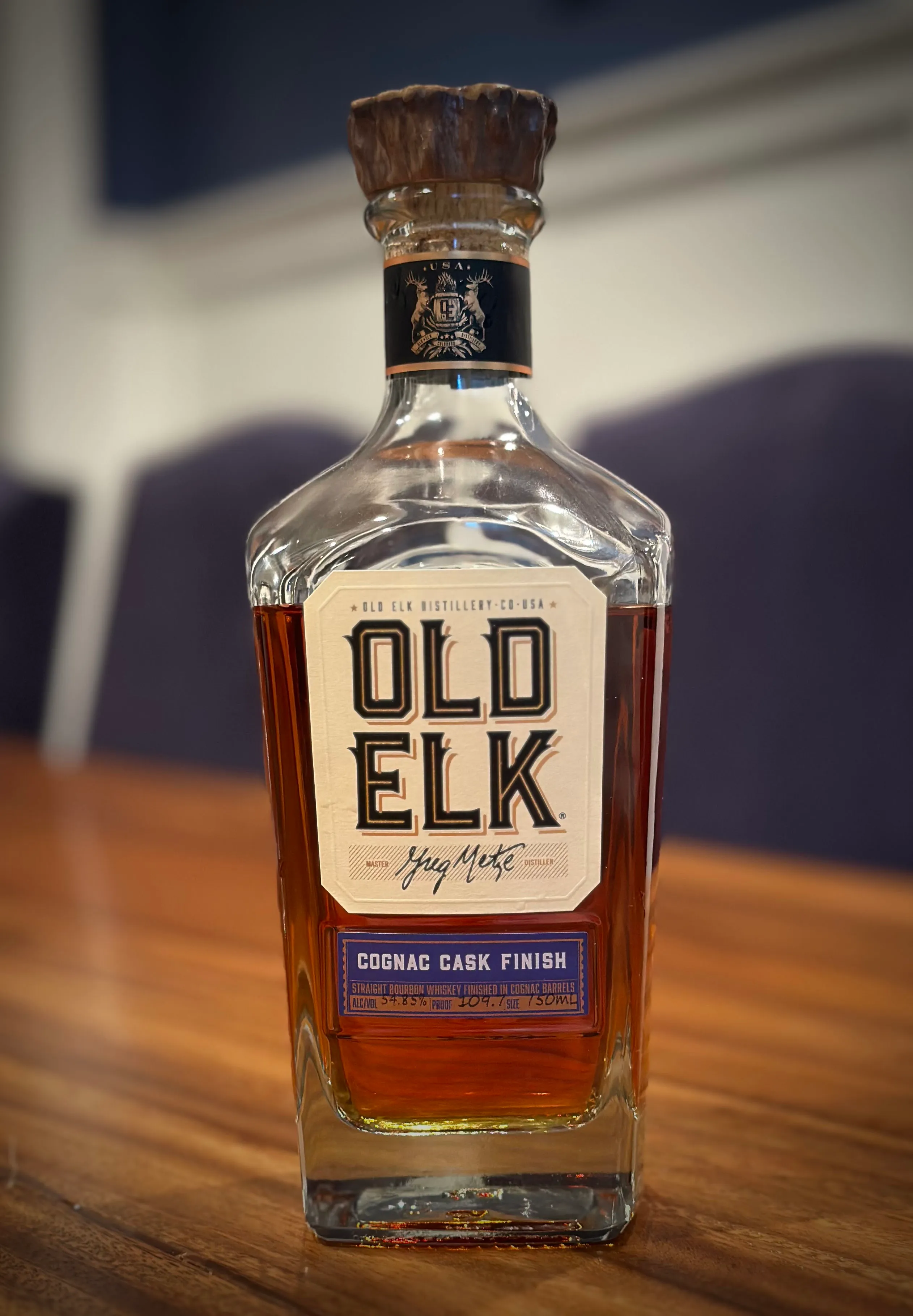
Nose: The cognac finish announces itself immediately and pulls the whole thing away from classic bourbon territory. Dark fruit leads — black cherries, raisins, and a stewed-plum quality that reads more like a brandy than a bourbon. Vanilla and oak sit underneath. The oak isn’t the sweet, caramelized kind you get from a well-aged Kentucky bourbon; it’s slightly astringent and drier, but not sharp enough to throw the nose off balance. It’s an inviting, fruit-forward aroma that signals exactly what the finish is doing.
Palate: The palate delivers on the nose. Stone fruit, raisins, and black cherries carry over, joined by a touch of oak. The cognac cask’s contribution is clear — this drinks darker and more wine-adjacent than the base bourbon would on its own. The tannic grip from the oak is a little more noticeable here than on the nose, lending some structure, but it stays on the right side of the line. At nearly 110 proof there’s some warmth, but it’s well-managed; this doesn’t drink hot. The high malted barley shows up as a grainy, almost bready depth underneath the fruit, which is the Old Elk signature doing its thing.
Finish: Straightforward and satisfying, echoing the fruit and oak from the palate. The one knock is length — for a bourbon bordering 110 proof, I’d expect the finish to hang around longer than it does. It lingers pleasantly with a soft sweetness, but it fades earlier than the proof promises. Not a dealbreaker, just the one spot where the bottle doesn’t fully cash the check the rest of it writes.
On the High-Malt Mashbill
It’s worth dwelling on that 34% malted barley, because it’s the thing that makes Old Elk different from nearly everything else in the bourbon aisle. Most bourbon uses malted barley purely for its enzymes — the malt converts starches to fermentable sugars during the mash, and a little goes a long way. Old Elk treats malted barley as a primary flavor grain, which is closer to what you’d see in a single malt than a bourbon. The result is a nuttier, grainier, slightly more savory profile than corn-forward bourbon delivers.
I’ll be honest: high-malt whiskeys aren’t usually my preference. The malt can read as a flat, cereal-grain note that I find less interesting than the caramel-and-spice interplay of a traditional bourbon. But this is a case where the finish works in the whiskey’s favor — the cognac cask’s dark fruit sits on top of the malt and partially masks the grain notes I’m less fond of. The two elements cover for each other in a way that makes this more enjoyable to me than the standard Old Elk bourbon.
Final Thoughts: This is a unique, fruit-forward bourbon that’s a genuine departure from traditional profiles, and the cognac finish is well-executed rather than gimmicky. If you like finished whiskeys and you’re looking for something that drinks darker and more brandy-adjacent than your typical bourbon, this is worth a try. The short finish keeps it out of the top tier for me, and the high-malt base won’t be everyone’s thing — but the cognac cask earns its keep, and this is one of the better releases I’ve had from Old Elk. A good bottle to pour blind for friends and watch them try to place the dark fruit.
If You Liked This, Try…
- Penelope Architect Build 9 — Another finished bourbon built around blending and secondary wood, this time with French oak staves rather than a cognac cask. Similar proof range, similar emphasis on the finish reshaping the base spirit. Good comparison for how different finishing approaches change the result.
- Elijah Craig Toasted Barrel — A more accessible, dessert-forward take on the finished-bourbon concept. Where the Old Elk goes dark and fruity, the EC goes sweet and toasted. Worth tasting alongside to understand how much the finishing barrel dictates the final character.
Rating: Middle Shelf — Rating system explained