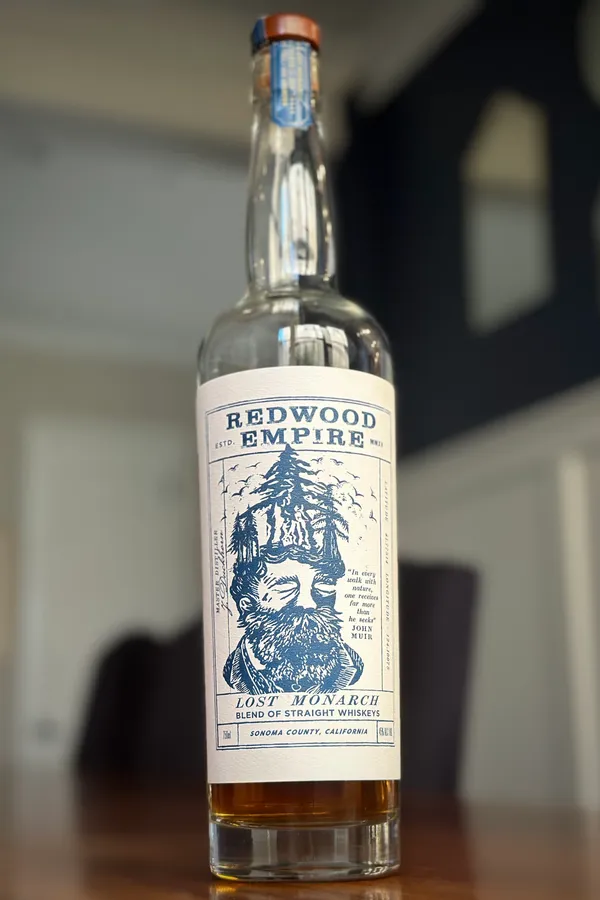
Redwood Empire Lost Monarch Whiskey Review: A Young Blend with Potential
Overview: Redwood Empire is a California distillery following a common modern playbook: source aged distillate from established producers, blend and bottle under your own label while your own distillate matures, then gradually shift toward estate-produced whiskey as the barrels come of age. They were established in 2015 and have been expanding their lineup steadily since. The Lost Monarch is their “Bourye” — a blend of 55% rye and 45% bourbon — which is a useful exercise in understanding what each side of that ratio brings to the mix.
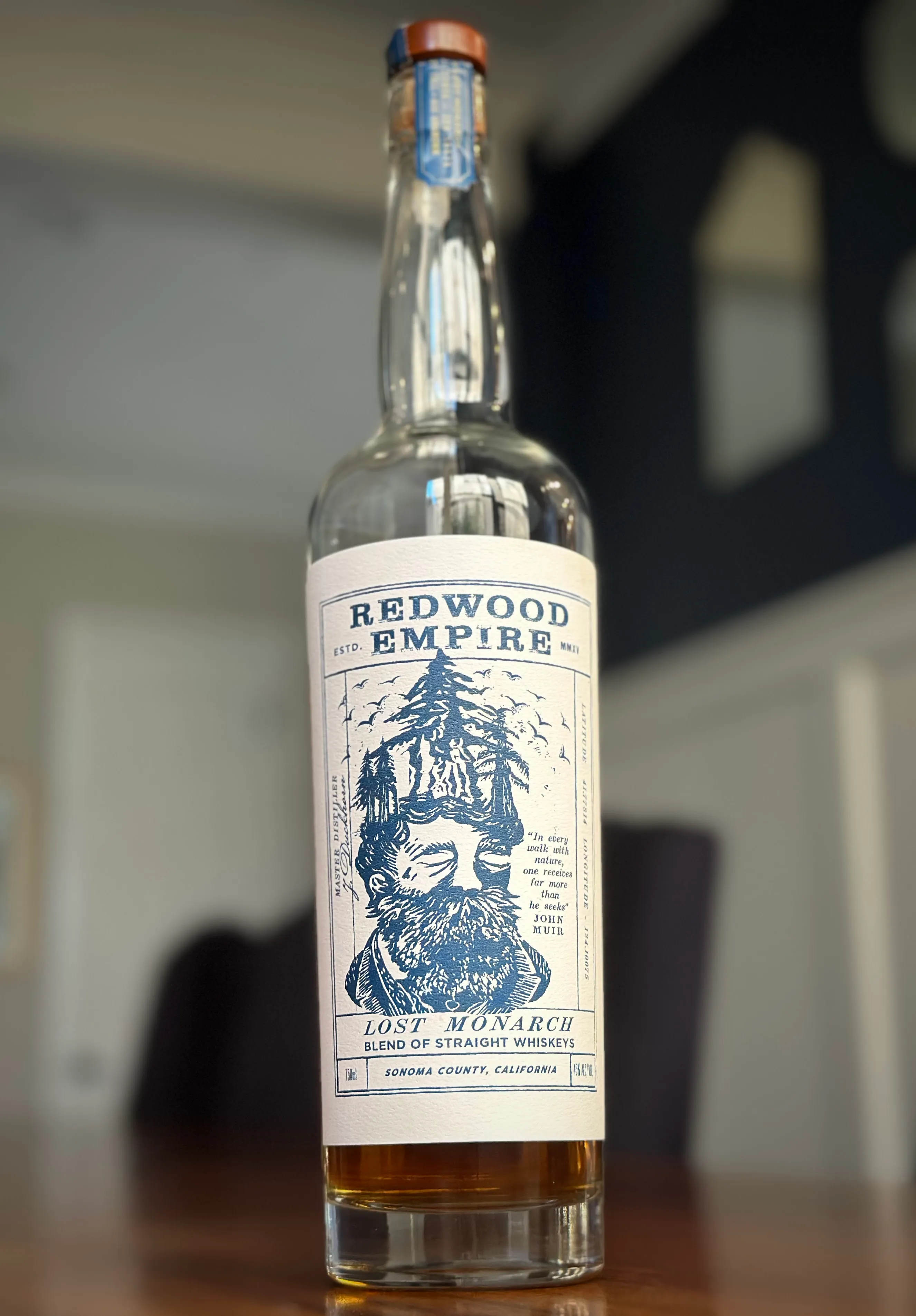
The label says “A Blend of Straight Whiskeys” and “Bottled in Graton, CA.” There’s no breakdown of where the distillate comes from, which is the nature of sourced blended American whiskey. At 3 years and 90 proof and a price point designed for regular buying, this is clearly meant as a value play rather than a showcase bottle. The question is whether the value proposition delivers.
How I Found It: California has a different relationship with local spirits than most states — there’s a genuine market here for California-bottled whiskey even when the distillate isn’t California-grown. Redwood Empire shows up on local shelves consistently and at accessible prices. I’ve tried a few of their releases over the years and found them generally solid for the category. The Lost Monarch was a shelf grab at a local shop, not a destination purchase — which is the right way to approach a bottle at this price point.
Age: 3 years
Proof: 90 (45% ABV)
Mashbill: Blend of straight whiskeys — 55% rye, 45% bourbon (source undisclosed)
Nose: Right off the bat, rye-forward. Baking spices lead — nutmeg, clove, something close to pumpkin spice — with a touch of caramel sweetness from the bourbon portion underneath. As it opens up, some youthful notes emerge: light grassiness, fresh grain, a quality that’s impossible to age away at three years. There’s also some oak and corn showing through that rounds it out. It’s a pleasant nose that signals exactly what you’re about to get.
Palate: The first sip runs a little hotter than 90 proof — there’s a noticeable ethanol edge and some rough corners that the youth hasn’t rounded off yet. Those sharp edges settle somewhat on the second and third sip. Once past the entry, the complexity starts to show up: the rye spices from the nose, joined by the bourbon side bringing caramel, cherry, and vanilla. Neither component fully dominates; they take turns. The result is more interesting than either a standard rye or a standard bourbon at this price would be on its own.
Finish: Longer than you’d expect for 90 proof — the high rye content in the blend keeps the finish going, delivering clove, cinnamon, and black pepper that linger past the sip. It’s one of the better parts of this bottle: after an entry that announces its youth, the finish actually keeps you interested in the next sip.
The Bourye Category
The rye-bourbon blend format (sometimes called “Bourye” in the trade) has been gaining ground as distilleries look for ways to differentiate their sourced-whiskey offerings. The concept is simple: blend two distinct straight whiskeys, each with its own character, to hit a profile that neither could produce alone. At 55/45 rye-to-bourbon, the Lost Monarch sits in spicy-leaning territory — you get rye’s grain assertiveness softened by bourbon’s sweetness and corn body. It’s a logical combination, and at three years the blend is more interesting than either side would be solo at the same age.
The youth is the main limitation. Another two or three years in the barrel — either before or after blending — would close the rough edges on the entry and give the oak more time to contribute structure rather than astringency. Redwood Empire presumably knows this, which is why the price is positioned where it is.
Final Thoughts: This isn’t going to be my go-to neat sipper, but it’s decently complex and holds up well as a cocktail base. The rough edges on entry are real — three years doesn’t fully sand them down — but the finish is better than the entry suggests, and the blend format creates interesting interactions between the rye and bourbon components. I’ll likely pick up another bottle; I’m genuinely curious to see how Redwood Empire’s releases evolve as their own distillate comes of age. The bones are good.
If You Liked This, Try…
- Bardstown Bourbon Company Origin Series Rye — A fully estate-distilled 95% rye at 96 proof with a cherry wood finish. More expensive and harder to find, but a useful benchmark for what a well-crafted rye looks like without the sourced-and-young-blend caveats.
- Michter’s US*1 Single Barrel Rye — Low proof, single barrel Kentucky rye at a similar price point. Very different approach — softer, more refined, less rough — but a useful comparison for what the rye character looks like without a bourbon component softening the edges.
Rating: Bottom Shelf — Rating system explained